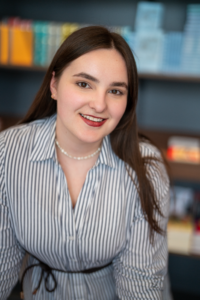
By Svitlana Olieinikova, founder of Synergy Universe
────────────────────────────────────────
My name is Svitlana Olieinikova. For twenty years I have worked with grants: writing applications, building fundraising departments, training teams. More than EUR 40 million of donor money has passed through my hands — USAID, GIZ, European foundations, private philanthropy. In Ukraine I built Synergy Universe: a consulting company, an academy, a club, and an association for grant standards.
In Switzerland I do the same work. But first I had to understand how this market actually operates — and that turned out to be a separate expertise, one that few people share.
HOW SWISS FUNDRAISING IS BUILT
The first thing worth knowing: the Swiss non-profit sector runs in German. Not “German preferred” — in German. Because applications go to cantonal authorities, boards meet in German, and legislation is read in German. English here is the language of presentations, not the language of work.
You can see it in the job postings. Take the Research Fundraiser position at EAWAG, the federal water research institute in Dübendorf. On substance it is an ideal role: science, international consortia, large grants. The requirement: excellent German or French.
And it is like that almost everywhere. The exception is a narrow segment of international foundations in Zurich where English is the internal working language: Jacobs Foundation, UBS Optimus, Z Zurich Foundation, Swiss Re Foundation, Rotary International. That segment is real, but it is small, and you have to find it deliberately.
There is a second layer that is rarely visible from outside: most Swiss public mandates are never published at all. The threshold for a public tender on simap.ch is CHF 230,000. Everything below that is awarded by direct appointment. For a consultant this means a cold approach to a specific person is not a backup channel — it is the main one.
WHY I CHOSE MANDATES OVER EMPLOYMENT
This was a decision, not a circumstance.
Let us count honestly. To reach working German — not conversational, but the level at which you write grant applications — takes two to three years. That is a normal timeline, and I am learning the language. But twenty years of expertise should not sit idle for those two or three years.
So I built a model in which the language of access is English, and the subject of the work is something the Swiss market cannot supply on its own.
Now I shifted my focus from looking for an employer to looking for mandates. A week later I registered as self-employed.
SELF-EMPLOYMENT WITH STATUS S: WHAT YOU NEED TO KNOW
Here I will say the things I could not find when I was looking for information. They will save you weeks.
With status S you do not need a work permit. As of 1 December 2025 the authorisation procedure was abolished. The employer simply files a notification with the cantonal authority before your first working day. No quotas, no labour market test, any canton, any profession. Protection has been extended to at least 4 March 2027.
Employers themselves often do not know this — and at the screening stage they decide that “status S is complicated.” So I write it directly in my CV and in the first email, one line, no explanation. The question is closed before it is raised.
For self-employment you need the Meldung Selbstständigkeit form. It asks for: type of activity, start date, level of occupation in percent, expected annual income. I entered consulting in grants and fundraising, fifty percent occupation, twenty hours a week.
You will need your ZEMIS number. It is on your S permit card, in small print. It took me longer to find it than to complete the entire form.
And the constraint that shapes the whole business model: status S allows you to spend only a limited time outside Switzerland — fifteen days per six months. Which means a “fly to the client” model does not work. It has to be replaced from the start, not discovered after the fact.
One more point about wording in documents. My CV used to say “German — working knowledge.” I changed it to “basic, currently studying.” Not out of modesty — because an inaccuracy in a CV surfaces at the first interview and closes the door for good. In Switzerland precision is valued more than a flattering impression.
HOW DOORS ACTUALLY OPEN HERE
The stereotype about slow Switzerland does not survive contact with reality.
When I approached Swiss companies about SECO’s third Call for Proposals — the programme for businesses working on Ukraine’s reconstruction — replies to the named emails came back in thirteen and nineteen minutes. Thirteen minutes from sending to a substantive answer from a managing director.
The difference is not in the text of the email. The difference is who it is addressed to. An email to info@ is read here by someone who makes no decisions, and the speed drops to zero. An email to the specific person responsible for that area is read immediately.
It is a simple thing, but it rearranges the entire logic of the work. In Switzerland there is no point in a mass mailing. There is a point in spending an hour finding out who exactly in the company owns the topic — and sending one precise letter.
A second observation about the same call: Swiss companies with a real presence in Ukraine have no need for a consultant. One managing director put it plainly: they have their own specialists on the ground, not a formal structure. He was right.
The consultant’s audience is the opposite: organisations that do not have a presence on the ground and therefore cannot verify a partner themselves, assess the risks, or confirm delivery capacity. That is not a smaller market. It is a different market, and the need in it is sharper.
WHY UKRAINIAN CONTEXT IS A SWISS ASSET
The hardest habit to drop was calling myself simply “a fundraiser.” Zurich has plenty of fundraisers, and all of them speak German. Competing with them on their own ground is a losing strategy by definition.
What they do not have is work from both sides of the grant table.
For twenty years I wrote applications. In recent years I have been doing the opposite: through the Grant Standard Association we are developing a standard for grant management — the criteria by which a donor should assess an organisation before giving it money. Audit, evidence, due diligence, six assessment domains.
That is a rare combination. People who write applications rarely build assessment systems. People who assess have usually never written.
Add what a Swiss consultant cannot have by definition: Ukrainian context. I know how to check an organisation in Dnipro when the registration documents look immaculate and there is nothing behind them. I know which questions to ask and where to look. This is not abstract knowledge — it is what a donor pays for, because a mistake in choosing a partner costs them a tranche and a reputation.
The model came out like this: I am the contracting party in Switzerland, and the fieldwork in Ukraine is done by my team, which I built over years and which mobilises anywhere in the country within two or three days. In documents I state it plainly: led from Switzerland, fieldwork by the team. This is not a workaround for a restriction — it is the normal structure of a consulting firm, and Swiss partners read it exactly that way.
FOUR THINGS I LEARNED ABOUT THIS MARKET
Previous experience does not convert on its own. Nobody will ask what you did before. Experience starts working only when you yourself show which local problem it solves.
Language is about access, not politeness. You can build a career in English, but only in a narrow segment. You have to find that segment deliberately, not hope you get lucky.
Precision matters more than impression. This applies to CVs, commercial proposals and emails alike. One imprecise phrase costs more than a modest but verifiable figure.
Speed here is high — for those who write to the right person. Thirteen minutes is not an exception. It is the norm, when the letter reaches the right desk.
AND FINALLY
When I arrived, it seemed the task was to translate myself. CV, experience, cases: from Ukrainian into English, from a Ukrainian context into a European one.
The task turned out to be different. Not to translate, but to move the emphasis.
What had been background in Ukraine — knowledge of the country, the risks, the real condition of organisations — became the main product here. And what had been the main product, the ability to write strong applications, is simply hygiene here: everyone working in the sector has it.
The market does not ask who you were. It asks which of its problems you solve better than the locals. The answer to that question is your position.
────────────────────────────────────────
ABOUT THE AUTHOR
Svitlana Olieinikova is the founder of Synergy Universe and a consultant in grants and fundraising. Twenty years in the field, more than EUR 40 million in grants secured, Stanford graduate. She lives and works with Swiss organisations and foundations funding projects in Ukraine.
LinkedIn: linkedin.com/in/svitlana-olieinikova
Company: synergy-universe.global
────────────────────────────────────────
Want to post your story? Contact us at info@lighthouse-legal.eu