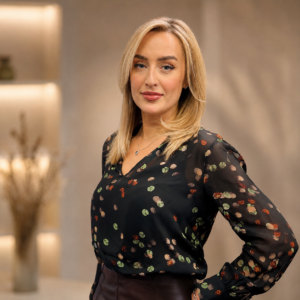
An Interview with Dr. Kateryna Kondratiuk, MD, PhD, MPH
Success Case | Lighthouse Legal Media
In today’s fast-paced world, maintaining good health has become increasingly challenging. Long working hours, constant stress, poor sleep, sedentary lifestyles, and endless information about diets and “miracle” health solutions often leave people confused about what truly works.
Modern healthcare, however, is undergoing a profound transformation. Instead of waiting until disease develops, physicians around the world are increasingly focusing on prevention, early diagnosis, and personalized care. The goal is no longer simply to extend life expectancy—it is to help people enjoy more healthy, active, and fulfilling years.
For Dr. Kateryna Kondratiuk, endocrinologist, PhD in Medical Sciences, and expert in preventive medicine and nutrition science, this philosophy has guided more than fifteen years of clinical practice. Her work focuses on hormonal health, metabolic medicine, healthy aging, and helping people build sustainable habits that improve both longevity and quality of life.
In this exclusive interview with Lighthouse Legal Media, Dr. Kondratiuk shares why prevention is becoming one of the most important directions in modern medicine, explains the science behind personalized nutrition, and offers practical advice that anyone can start applying today.
Lighthouse: Dr. Kondratiuk, could you tell us a little about yourself and your professional journey?
Dr. Kateryna Kondratiuk:
Good afternoon.
I am an endocrinologist and PhD in Medical Sciences. For more than fifteen years, I have worked in endocrinology, metabolic medicine, preventive healthcare, and longevity medicine.
Throughout my career, I have supported both women and men who want not only to overcome existing health conditions but also to preserve their health, energy, and quality of life for many years.
My professional interests include hormonal health, metabolic disorders, age-related changes, nutrition science, and personalized preventive medicine.
I firmly believe that longevity should never be measured simply by the number of years we live. True longevity means remaining physically active, mentally sharp, emotionally balanced, and able to enjoy life at every stage.
Healthcare today gives us incredible opportunities to prevent disease before it develops, and that is exactly where I believe medicine should focus its attention.
Preventive medicine has become one of the fastest-growing areas of healthcare worldwide. As chronic diseases continue to affect millions of people, physicians increasingly emphasize lifestyle interventions alongside traditional treatment. According to Dr. Kondratiuk, prevention begins with everyday decisions rather than expensive medical procedures.
Lighthouse: We live in an age of constant stress. Is it still realistic for people to maintain good health?
Dr. Kateryna Kondratiuk:
There is no universal formula that works perfectly for everyone. Every individual has unique genetics, lifestyle, work environment, and personal challenges.
However, there are several fundamental principles that remain effective for almost everyone.
A balanced diet.
Sufficient, high-quality sleep.
Regular physical activity.
Effective stress management.
And perhaps most importantly, a conscious attitude toward one’s own health.
Many people expect dramatic changes to happen overnight, but real health is built through consistent daily habits.
I always encourage my patients to begin by evaluating their everyday routine.
Do they actually have enough time for lunch?
Do they eat regularly?
Can they spend even thirty uninterrupted minutes enjoying a meal without simultaneously answering emails, scrolling through social media, or participating in work meetings?
These may seem like insignificant details, but in reality they create the foundation upon which long-term health is built.
Preventing chronic diseases often starts with these simple routines that many people overlook.
For many professionals, nutrition is associated with strict diets, endless restrictions, or giving up favourite foods. Dr. Kondratiuk believes this perception is outdated.
Lighthouse: How important is proper nutrition in today’s world?
Dr. Kateryna Kondratiuk:
Nutrition plays an incredibly important role in maintaining overall health.
However, modern nutrition science is no longer about rigid diets or constantly restricting yourself.
Medicine has moved far beyond the outdated concept of “forbidden foods.”
Today, our goal is not to make people afraid of food but to help them develop an individualized eating pattern that fits naturally into their lives.
Healthy nutrition should be sustainable.
It should be enjoyable.
And most importantly, it should work for the individual rather than forcing every person into the same universal template.
People often assume they cannot eat well if they travel frequently, attend business meetings, or regularly dine at restaurants.
That simply is not true.
A healthy lifestyle is entirely possible regardless of your schedule.
The key is understanding your body’s needs, making thoughtful food choices, combining foods wisely, and paying attention to portion sizes rather than seeking perfection.
Equally important is developing a healthy relationship with food.
Nutrition is not only about what we eat.
It is also about how we eat, how we experience meals, and how consistently we support our bodies through everyday habits.
Lighthouse: Many professionals say they simply don’t have enough time to prepare healthy meals. What do you tell them?
Dr. Kateryna Kondratiuk:
This is probably one of the most common misconceptions I hear.
Healthy eating does not require spending hours in the kitchen every single day.
In reality, meal planning can be remarkably simple.
Sometimes lunch can be almost identical to breakfast or consist of just a few high-quality ingredients that provide balanced nutrition.
Fortunately, today’s restaurants also offer far more healthy options than they did several years ago.
The real skill is learning how to make healthier decisions regardless of where you are.
This is why I believe personalized nutrition plans are significantly more effective than universal diets.
Every individual has different needs, different routines, and different goals.
A personalized strategy is always easier to maintain over the long term than a restrictive plan that does not fit someone’s lifestyle.
Lighthouse: Modern medicine offers increasingly effective medications for weight management and metabolic disorders. Can medication replace healthy nutrition?
Dr. Kateryna Kondratiuk:
No, it cannot.
Modern medicine has made tremendous progress. Today we have medications that can regulate appetite, improve insulin sensitivity, and support people living with obesity or metabolic disorders.
These treatments have changed the lives of many patients and have become an important part of modern endocrinology.
However, medication should never be viewed as a substitute for a healthy lifestyle.
Its greatest value comes when it is combined with sustainable lifestyle changes.
Healthy eating habits, regular physical activity, quality sleep, and stress management remain the foundation of long-term health.
Medication can support this journey, but it cannot replace it.
The goal is not simply to reduce body weight.
The goal is to improve overall metabolic health and create habits that patients can maintain for years, rather than only during treatment.
Healthcare is becoming increasingly individualized. Rather than relying on generalized recommendations, physicians can now better understand how each patient’s body responds to food, exercise, and daily habits. This shift is transforming preventive medicine and opening new possibilities for truly personalized healthcare.
Lighthouse: Personalized medicine has become one of the biggest trends in healthcare. How personalized has medicine become today?
Dr. Kateryna Kondratiuk:
Modern medicine is becoming more personalized every year.
Today we have technologies that allow us to understand an individual’s health far more accurately than ever before.
One example is continuous glucose monitoring.
These devices enable us to observe how a person’s body responds to different foods throughout the day.
Interestingly, the same meal may produce completely different glucose responses in different people.
Something that works perfectly well for one individual may not be suitable for another.
This is why personalized medicine has become one of the fundamental principles of longevity medicine.
Instead of giving identical recommendations to everyone, we are increasingly able to develop strategies tailored to each patient’s metabolism, lifestyle, medical history, and personal goals.
I believe this individualized approach represents the future of healthcare.
Stress has become one of the defining characteristics of modern life. Yet its effects extend far beyond emotional wellbeing. Long-term stress changes hormonal balance, eating behaviour, metabolism, and even cardiovascular health. Understanding these mechanisms is essential for preventing chronic disease.
Lighthouse: Many people notice that they overeat during stressful periods. Why does stress affect our eating behaviour so strongly?
Dr. Kateryna Kondratiuk:
Stress has a significant physiological impact on the human body.
During periods of chronic stress, cortisol levels increase.
One consequence of elevated cortisol is the appearance of strong cravings for sweets, pastries, sugary foods, and fast carbohydrates.
This is not simply a matter of willpower.
It is the body’s natural attempt to obtain energy quickly while also stimulating dopamine production.
The problem is that these foods cause rapid increases in blood glucose and insulin levels.
Over time, repeated spikes may contribute to insulin resistance, obesity, cardiovascular disease, and other metabolic disorders.
For this reason, maintaining regular meals becomes especially important during stressful periods.
A balanced meal containing sufficient protein, vegetables, healthy fats, whole grains, and nuts helps stabilize blood glucose levels and reduces the likelihood of uncontrolled cravings.
Nutrition can become one of the most effective tools for helping the body cope with stress.
Lighthouse: On the other hand, some people lose their appetite completely when they experience stress. Should this also be a concern?
Dr. Kateryna Kondratiuk:
Absolutely.
Loss of appetite is often overlooked because people assume that eating less is somehow healthier.
In reality, a complete loss of appetite may indicate severe emotional stress.
When this continues over time, it can result in nutritional deficiencies, exhaustion, muscle loss, and declining physical health.
People react to stress differently.
Some begin overeating.
Others almost stop eating altogether.
Neither response should be considered normal if it persists.
Both situations deserve professional attention.
Quite often, we work together with psychologists because eating behaviour is closely connected with emotional wellbeing and mental health.
Supporting a patient therefore requires understanding not only physical symptoms but also psychological factors.
While emotional eating receives considerable attention, restrictive eating patterns can be equally harmful. Modern preventive medicine aims to establish sustainable habits rather than encourage extreme approaches that may ultimately damage both physical and mental health.
Lighthouse: What are the long-term consequences of chronic overeating or extreme dietary restrictions?
Dr. Kateryna Kondratiuk:
Both extremes carry serious health risks.
Unhealthy eating habits and eating disorders may contribute to obesity, insulin resistance, type 2 diabetes, non-alcoholic fatty liver disease, dyslipidaemia, cardiovascular disease, and hormonal disorders.
At the same time, restrictive eating disorders such as anorexia nervosa and bulimia are equally dangerous.
These conditions affect virtually every organ system in the body.
They may damage the nervous system, liver, cardiovascular system, reproductive health, and, in severe cases, become life-threatening.
This is why I always encourage people to avoid extreme diets and self-experimentation.
Health is built through consistency, balance, and professional guidance—not through temporary restrictions or unrealistic expectations.
Lighthouse: How can people recognize that their body is already signaling a problem?
Dr. Kateryna Kondratiuk:
Our bodies are always communicating with us.
The challenge is that many people ignore these signals until they become impossible to overlook.
Persistent fatigue, mood changes, poor sleep, constipation or diarrhoea, abdominal bloating, discomfort in the upper right part of the abdomen, sudden weight gain or weight loss, loss of appetite, or constant hunger should never be considered “normal.”
These symptoms may appear insignificant individually, but together they often indicate that the body is struggling to maintain balance.
The earlier a person seeks medical advice, the easier it becomes to identify the underlying cause and correct the problem before more serious complications develop.
Preventive medicine is not about waiting for illness.
It is about recognising the body’s early signals and responding before disease progresses.
Modern diagnostics make it possible to detect metabolic and hormonal changes years before noticeable symptoms appear. Regular health assessments are becoming an essential part of maintaining long-term wellbeing rather than simply treating illness.
Lighthouse: Which medical examinations should people include in their regular health check-ups?
Dr. Kateryna Kondratiuk:
I always recommend monitoring carbohydrate metabolism.
This includes blood glucose levels, insulin levels, and evaluating insulin resistance whenever appropriate.
It is equally important to assess the lipid profile, liver function, kidney function, and other indicators based on a person’s age, family history, existing medical conditions, and individual risk factors.
Routine medical examinations allow us to identify changes long before symptoms become obvious.
This gives both physicians and patients valuable time to prevent disease rather than simply respond to it.
Every preventive examination should be personalised because every patient has different needs and different health risks.
Throughout the interview, one theme continues to appear: lasting health is rarely the result of a single medical procedure or a perfect diet. Instead, it is built through consistency, moderation, and everyday habits that support both body and mind.
Lighthouse: If you had to name the three most important pillars of a long and healthy life, what would they be?
Dr. Kateryna Kondratiuk:
My answer has remained the same throughout my career.
There are three essential pillars of health.
The first is quality sleep.
The second is balanced nutrition.
The third is regular physical activity.
When these three elements work together, they become far more powerful than any trendy diet, quick health challenge, or temporary solution.
Physical activity does not have to be exhausting.
Walking, swimming, dancing, cycling, yoga, Pilates, or any other enjoyable form of movement can provide remarkable health benefits.
The most important factor is consistency.
Choosing an activity that you genuinely enjoy makes it much easier to maintain over many years.
Long-term health is never built through perfection.
It is built through sustainable habits that become part of everyday life.
Lighthouse: Finally, what message would you like to leave to our readers?
Dr. Kateryna Kondratiuk:
Do not postpone taking care of yourself.
Modern medicine gives us extraordinary opportunities not only to live longer but also to live healthier and enjoy a better quality of life.
The better we understand our own bodies, the easier it becomes to prevent disease, maintain energy, and preserve health for many years.
Your health is the most valuable investment you will ever make.
Every healthy habit you build today becomes a gift to your future self.
Editorial Conclusion
Healthcare is changing.
For decades, medicine focused primarily on diagnosing and treating disease. Today, the conversation is shifting toward prevention, early intervention, and personalised care. Instead of asking how to treat illness, healthcare professionals are increasingly asking how to prevent it altogether.
Dr. Kateryna Kondratiuk’s approach reflects this evolution. By combining endocrinology, metabolic medicine, nutrition science, and longevity medicine, she helps patients understand that lasting health is not achieved through quick fixes or restrictive diets. It is built through informed decisions, sustainable routines, and a deeper understanding of how the body functions.
Whether discussing nutrition, stress, hormonal health, or modern diagnostic technologies, one message remains constant: small daily choices shape our future far more than occasional dramatic efforts.
Preventive medicine is not simply about extending life expectancy.
It is about preserving vitality, independence, mental clarity, and quality of life at every age.
At Lighthouse Legal Media, we believe that true success is measured not only by professional achievements but also by the positive impact experts make on people’s lives.
Dr. Kateryna Kondratiuk’s work is an inspiring example of how science, compassion, and evidence-based medicine can empower individuals to take control of their health and invest confidently in their future.