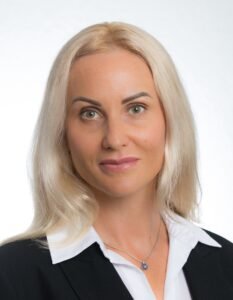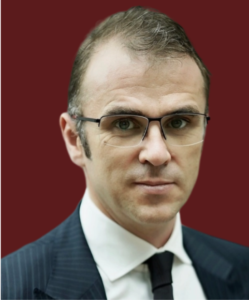
By Iurie Moraru, member Steering Committee Lighthouse Legal Media
Executive Summary
Ukraine’s rebuild is the single largest capital-deployment story in Europe since the post-war era. The World Bank/EU/UN joint estimate (RDNA5, February 2026) puts total needs at roughly USD 588 billion over ten years; direct damage alone exceeds USD 195 billion across housing, transport, energy and industry.
For foreign investors the question is no longer whether Ukraine is investable — it is where to deploy capital, in which instruments, and at what stage of the cycle. This note maps the funding architecture, the investable securities, the private-capital vehicles now deploying on the ground, and the risks that still demand respect.
This is, in effect, a decade-long public-works programme with the backing of the EU, the G7, Switzerland and the multilateral development banks. That changes the risk math.
1. Follow the Money: Who Is Funding What
A layered financing architecture combines sovereign budgets, multilateral guarantees and blended finance designed to pull in private capital:
- EU Ukraine Investment Framework: EUR 5.7 billion in guarantees and grants already delivered, mobilising roughly EUR 18 billion in total. Reinforced envelope at EUR 9.5 billion plus EUR 127 million from Norway.
- U.S.–Ukraine Reconstruction Investment Fund: fully operational since early 2026, targeting critical minerals, energy, transport, logistics, ICT and emerging tech.
- IFC, MIGA and EBRD: IFC has committed USD 2.7 billion since 2022. MIGA has issued USD 217 million in political-risk guarantees. The EBRD/Aon EUR 110 million Ukraine Recovery and Reconstruction Guarantee Facility provides war-risk cover.
- Switzerland: CHF 5 billion through 2036. CHF 500 million earmarked for Swiss private-sector mobilisation. SECO’s second Call for Proposals (January 2026, up to CHF 150 million) and the Major Infrastructure Projects mandate now under Swiss Export Risk Insurance (SERV).
Add the EU’s channelling of extraordinary revenues from frozen Russian sovereign assets at Euroclear, and the funding picture transforms from frontier-market bet into a partially insured, multilaterally de-risked exposure.
2. Where to Deploy Capital: Sectors and Names
Research desks at Goldman Sachs, Bank of America, Saxo Bank, Morgan Stanley, HANetf and VettaFi broadly converge on six investable themes.
2.1 Building Materials and Construction
Rebuilding USD 84 billion of housing and USD 78 billion of transport infrastructure requires cement, aggregates and engineered materials on an industrial scale.
- CRH plc (NYSE: CRH) — three cement plants in Ukraine; now the country’s largest cement producer after acquiring Buzzi Unicem’s Ukrainian asset.
- Heidelberg Materials (ETR: HEI) and Holcim (SWX: HOLN) — European sector leaders with balance-sheet strength to supply at scale.
- Saint-Gobain (EPA: SGP) — Morgan Stanley top pick on insulation, glazing and interior systems for EU-standard rebuilds.
Caveat: much of the reconstruction premium is already in the price. The thesis now depends on the pace of contract awards, not the narrative.
2.2 Energy and Grid Modernisation
Over USD 20 billion in direct damage, USD 72 billion in lost revenue. The World Bank estimates USD 67 billion to fully rebuild. Roughly 60% of Ukrainian gas production was knocked offline after the October 2025 attacks.
- Siemens Energy (ETR: ENR) — gas turbines, grid kit, wind. Top UKRN ETF holding at 5.7%.
- ABB (SWX: ABBN) — electrification, automation and grid modernisation. 4.5% of UKRN.
- Vestas Wind Systems (CPH: VWS) — 83-turbine order from DTEK (498 MW), plus 384 MW expected by end-2026. Ukraine targets 27% renewables by 2030 — implying roughly USD 20 billion in renewables investment.
- Johnson Controls (NYSE: JCI) — HVAC and building automation; UKRN’s second-largest holding at 4.6%.
- Fluence Energy (NASDAQ: FLNC) — deploying six battery sites totalling 200 MW with DTEK. Grid-scale storage already under construction.
2.3 European Industrials — The Broad Beta
Goldman Sachs estimates a limited ceasefire would add 0.2–0.5% to Euro-area GDP and has raised its STOXX 600 target (8% 12-month total return). Both Goldman Sachs and Bank of America have published baskets of European stocks as broad reconstruction exposure — attractive for investors who want the theme without single-name concentration.
2.4 Defence and Security
A ceasefire would not reverse the structural rise in European defence spending. NATO allies are moving toward 3.5% of GDP; ammunition stocks, replaced equipment and air defence all need rebuilding. The VettaFi index includes defence names with over 50% of revenue from defence equipment — a structural multi-year rerating, not a war premium.
2.5 Agriculture and Agribusiness
Agriculture drives over 59% of Ukrainian export revenue and capital investment exceeded UAH 45 billion in 2024 (~12% of national capex). Needs: over USD 55 billion. M&A is already live.
- Continental Farmers Group — backed by Saudi Arabia’s SALIC, expanding in Western Ukraine.
- Astarta Holding (WSE: AST) — acquiring elevators and farming businesses in Poltava and Khmelnytskyi.
- Food4Impact (F4i) — EUR 150 million agrifood fund (Diligent Capital / 2ndAries), backed by the EU’s Ukraine Investment Framework.
2.6 IT and the Digital Economy
Ukrainian tech generated USD 7.5 billion in 2025; 98% of IT companies kept operating through the full-scale invasion. The Diia.City regime hosts over 1,560 companies. The government targets 10% IT share of GDP by 2030.
Modern reconstruction is as much about software, data and connectivity as cement and steel. Investors who ignore the digital layer are missing half the opportunity.
3. The UKRN ETF: One Ticker, Whole Thesis
In March 2026, HANetf launched the Ukraine Reconstruction UCITS ETF (ticker: UKRN) on the LSE, Deutsche Börse and Borsa Italiana — the first UCITS ETF dedicated to the theme. It tracks the VettaFi Ukraine Reconstruction Index: ~50 companies across European infrastructure, industrials and defence. Companies with Russian operational exposure are excluded. Top holdings: Siemens Energy (5.7%), Johnson Controls (4.6%), ABB (4.5%).
For investors who want theme exposure in one line without picking single names, UKRN delivers. Caveat: the fund is new — monitor liquidity and tracking error before sizing up.
4. Fixed Income: The Contrarian’s Corner
The 2024 Restructuring
Ukraine restructured USD 20.5 billion of international bonds — one of the largest sovereign restructurings in EM history. Terms: 37% principal haircut, coupon reductions, maturity extensions. Debt stock fell by over USD 8.5 billion; debt service reduced by over USD 22 billion through 2033.
The GDP-Warrant Cleanup
In December 2025, GDP-linked warrants were swapped into plain-vanilla Eurobonds maturing 2032 (the “C notes”). Exchange ratio: USD 1.34 of new bonds per USD 1 of warrants; 99% acceptance. Coupon steps up: 4% initially, 5.5%, then 7.25% from 2029.
Where the Bonds Are Trading
Ukrainian Eurobonds traded at 50–65 cents through 2025. Price drivers are almost entirely political. For credit investors, the upside hinges on a durable ceasefire and recovery speed — a high-conviction, geopolitically exposed trade offering genuine asymmetry.
5. Private Capital: Who Is Already on the Ground
Buying European equities or Ukrainian bonds gives you exposure to the reconstruction theme. But a different class of investor is going further — putting equity directly into Ukrainian projects and companies, often alongside development-finance institutions that absorb a meaningful share of the downside. Here are the vehicles that matter most right now.
5.1 Horizon Capital — The Kyiv-Based First Mover
Horizon Capital is Ukraine’s most established private equity firm — over 30 years in the region, USD 1.8 billion in assets under management across seven funds. In January 2026, at Davos, it held the first closing of its new Catalyst Fund: €152 million raised in just six months, more than half of the €300 million target. The investors behind it tell the story: the IFC committed up to €50 million, joined by the EBRD, France’s Proparco, Sweden’s Swedfund, Norway’s Norfund and the Dutch FMO.
Each deal is sized at €20–50 million, focused on energy, digital infrastructure and construction. The fund isn’t just planning — it has already deployed. Its first investment is a 45% stake in a 124 MW wind project by Notus Energy in the Odesa region, a €220+ million project that is the first of three wind farms totalling roughly 300 MW — itself part of a much bigger 1.3 GW renewable pipeline. The EBRD is preparing a €65 million senior loan alongside it. Horizon’s broader ambition: use these anchor investments to crowd in up to €3 billion in follow-on capital from international co-investors.
5.2 URIF — Washington’s Reconstruction Vehicle
The U.S.–Ukraine Reconstruction Investment Fund was set up through the U.S. Development Finance Corporation (DFC) in April 2025 and became fully operational in early 2026, with a joint U.S.–Ukrainian board and an open application portal. It focuses on sectors where American strategic interest and Ukrainian needs overlap: critical minerals, energy, transport, ICT and emerging tech. In March 2026 it made its first investment — an equity stake in Sine Engineering, a Ukrainian company building radio-communication systems for drones. It is a telling choice: dual-use technology with both commercial scale and defence relevance. Several more deals are in advanced diligence.
5.3 The EU’s Flagship Equity Fund
The European Commission is building a direct equity fund — not debt, equity — backed by the EIB and the development banks of Germany (KfW), Italy (CDP), France (Proparco) and Poland (BGK). The initial target is €220 million in seed capital with a first closing of up to €500 million. Fund manager selection wrapped up in late 2025, and the first investments are expected by end-2026. What makes this fund distinctive is its political anchoring: four of Europe’s largest member states plus the Commission itself are behind it, and it is explicitly tied to Ukraine’s EU-accession path. That gives it a staying power that outlasts any single election cycle.
5.4 The BlackRock Chapter — And What It Teaches
In 2023–2024, BlackRock and JPMorgan Chase advised pro bono on the Ukraine Development Fund, a blended-finance vehicle designed to raise at least USD 15 billion. The idea was classic: public money absorbs the first losses, making it safe enough for private investors to come in at five to ten times the public commitment. Germany, Italy and Poland signed up, and around USD 500 million in initial capital was committed.
Then the November 2024 U.S. election happened. Investor appetite evaporated overnight, and BlackRock stepped back in January 2025. France picked up the thread, channelling the effort into what became the EU Flagship Fund. The lesson here is important: the world’s largest asset manager looked at the numbers and concluded the economics worked. What killed momentum was not asset-level risk but political uncertainty in Washington. And even that story may not be over — by early 2026, reports from the Paris Coalition of Willing suggest the BlackRock-anchored agreement could be nearing final approval.
5.5 Smaller Funds, Real Deals
Below the headline vehicles, a layer of sector-focused funds is filling gaps that commercial banks cannot. Food4Impact, a €150 million agrifood mezzanine fund backed by a €75 million EU guarantee, provides debt and equity to agricultural operators — in an economy where farming generates 59% of export revenue, that matters. Meanwhile, the IFC and EBRD are seeding PE and VC initiatives with local Ukrainian fund managers, aiming for over €600 million across infrastructure, private equity and venture capital. The domestic ecosystem — led by Horizon Capital, AVentures Capital and TA Ventures — is small but has proven remarkably resilient through years of full-scale war.
5.6 Why This Matters for Family Offices
These funds offer three things you cannot get from buying an ETF. First, co-investing alongside development-finance institutions like the IFC and EBRD means someone else is absorbing first-loss risk on your behalf. Second, ticket sizes of €20–50 million at fund level, with co-investment options on individual deals, are sized for institutional capital rather than retail. And third, the managers running these funds live and work in the market — their alignment of interest is not theoretical.
6. What Can Go Wrong — A Frank Risk Framework
No serious investor should underwrite this thesis without looking straight at the downside:
- War and ceasefire risk: a durable ceasefire is not yet secured. Betting markets have priced probability as high as 70% — and repeatedly repriced.
- Funding gaps: even with multilateral commitments, gaps persist (RDNA4 identified USD 9.96 billion for 2025 alone).
- Institutional risk: enforcement, judicial reliability and corruption perceptions are improving but remain relevant.
- Physical asset risk: Russian strikes continue; the October 2025 gas-infrastructure attack knocked out ~60% of domestic gas production.
- Valuation risk: many European construction and industrial names have already rallied on reconstruction optimism.
- Geopolitical and policy risk: EU regulation, U.S. foreign-policy continuity, sanctions enforcement and treatment of frozen Russian assets all shape the funding stack.
7. How to Structure Exposure Intelligently
Phased entry, not a binary bet
Portfolios should perform under both a durable ceasefire and a relapse into frozen conflict. A single all-in trade around a headline is exactly the wrong framing.
Diversify across the value chain
UKRN ETF, Goldman/BofA thematic baskets and broad European industrial exposure dilute single-name risk. The value chain extends beyond cement and steel into engineering, energy systems, IT, insurance, financial services and logistics.
Use the de-risking instruments
MIGA guarantees, EBRD war-risk cover, EU blended finance — and for Swiss sponsors, SERV coverage and SECO co-financing — exist to bring Ukrainian exposures inside institutional mandates.
Match instruments to time horizon
European industrial equities capture near-term sentiment. Restructured Ukrainian sovereigns offer longer-duration asymmetry. Direct PPP, concession and PE fund participation is for patient capital with the governance to ride a full cycle.
8. Conclusion
Ukraine’s reconstruction is a measurable, multi-hundred-billion-dollar programme anchored by multilateral institutions, sovereign commitments and an increasingly sophisticated risk-mitigation architecture. The investable universe — equities, the UKRN ETF, restructured sovereigns, dedicated private-capital funds, PPP vehicles and agri-sector instruments — is open and widening.
Conflict risk, funding gaps, institutional capacity and valuation stretch all remain real. The answer is not to stay on the sidelines but to build positions incrementally, lean on the multilateral and Swiss de-risking toolkit, and maintain genuine diversification.
For family offices and institutional investors with the mandate, risk tolerance and time horizon, this is a rare intersection of geopolitical significance, economic scale and long-term value creation. The question is no longer whether the opportunity exists — it is how to structure exposure intelligently. That is the conversation Lighthouse is built for.
Disclaimer
This article is published for informational and educational purposes only. It does not constitute investment advice, a solicitation or an offer to buy or sell any securities, financial instruments or investment products. Information is based on publicly available sources, institutional research and regulatory disclosures believed to be reliable; no representation or warranty is made as to accuracy, completeness or timeliness. Past performance is not indicative of future results. Investing in Ukraine-linked securities involves significant risks, including geopolitical, conflict, regulatory, liquidity and currency risk. Investors should conduct their own due diligence and consult qualified financial, legal and tax advisors. Lighthouse Legal and its affiliates accept no liability for losses arising from use of this material.
Key Sources
- World Bank, EU, UN — Rapid Damage and Needs Assessment 5 (RDNA5), February 2026; RDNA4, February 2025
- European Commission — Ukraine Investment Framework
- U.S. International Development Finance Corporation — U.S.–Ukraine Reconstruction Investment Fund, 2026
- Swiss Federal Council — CHF 5 billion Ukraine commitment through 2036 (February 2025)
- SECO — Second Call for Proposals for Ukraine Reconstruction Projects (January 2026)
- Swiss Export Risk Insurance (SERV) — Major Infrastructure Projects (GIP) mandate, 2026
- IFC — Rebuilding Ukraine: Investment Opportunities in Innovative and Sustainable Construction, 2025
- MIGA — Ukraine Response and SURE Trust Fund; EBRD / Aon — Ukraine Recovery and Reconstruction Guarantee Facility
- Goldman Sachs — European Equity Strategy, STOXX 600 Target Revision, February 2025
- Bank of America Securities — Ukraine Reconstruction Sector Research, February 2025
- Saxo Bank — From Trenches to Tenders: The Investor Playbook for a Possible Ukraine Peace Deal, November 2025
- Morgan Stanley — European Building Materials Research, 2025
- HANetf / VettaFi — Ukraine Reconstruction UCITS ETF (UKRN), March 2026
- Dentons — Building the Framework for Recovery in Ukraine, 2026; Mayer Brown — Ukraine’s PPP Reform, July 2025
- White & Case — Ukraine Concludes Historic Restructuring of USD 20.5 Billion in International Bonds
- CSIS — Insurance as a Critical Enabler for Investing in Ukraine; IEA — Ukraine’s Energy Security: Pre-Winter Assessment
- Horizon Capital — Catalyst Fund First Closing, January 2026; IFC — Investment in Horizon Capital Fund, 2026
- DFC — URIF First Investment Announcement, March 2026
- European Commission — European Flagship Fund for the Reconstruction of Ukraine, 2025–2026
- Bloomberg — BlackRock Halted Ukraine Fund Talks, July 2025; Kyiv Independent — France Working on Replacement, 2025
- Diligent Capital Partners / 2ndAries — Food4Impact Fund Launch, 2025