
ReBuild Ukraine 2026 in Warsaw brought together over 7,500 participants, more than 800 exhibitors and new SECO contracts. The money, partners and political will are in place. The question rarely asked out loud is what to communicate, to whom and when — in a country at war.
By Kateryna Moskal, Strategic Communications & Stakeholder Engagement Expert
ReBuild Ukraine 2026 showed that the resources, partners and political will for Ukraine’s recovery are in place. Each recovery project, however, also faces a question that is rarely asked out loud: what to communicate, to whom and when, in a country at war. Strategic communications in recovery help find the right answer.
Warsaw 2026: commitments are no longer the bottleneck
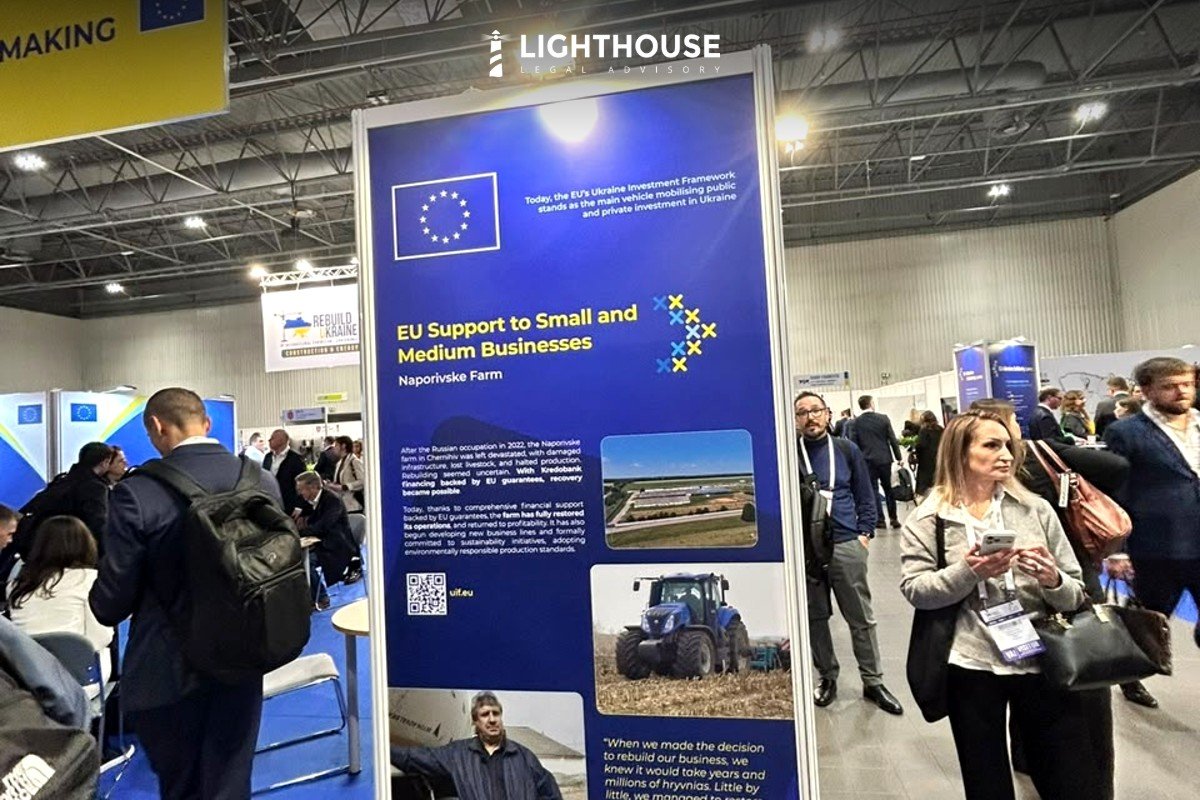
On 12–13 November, Warsaw hosted one of the key events that shape and drive recovery projects in Ukraine. The sixth international exhibition and conference ReBuild Ukraine 2026 brought together more than 800 exhibitors and over 7,500 participants and saw significant financial commitments for new solutions. Governments, international organisations, donors, businesses and Ukrainian communities demonstrated both the capacity and the will to build new partnerships and scale up opportunities for a better life in Ukraine.

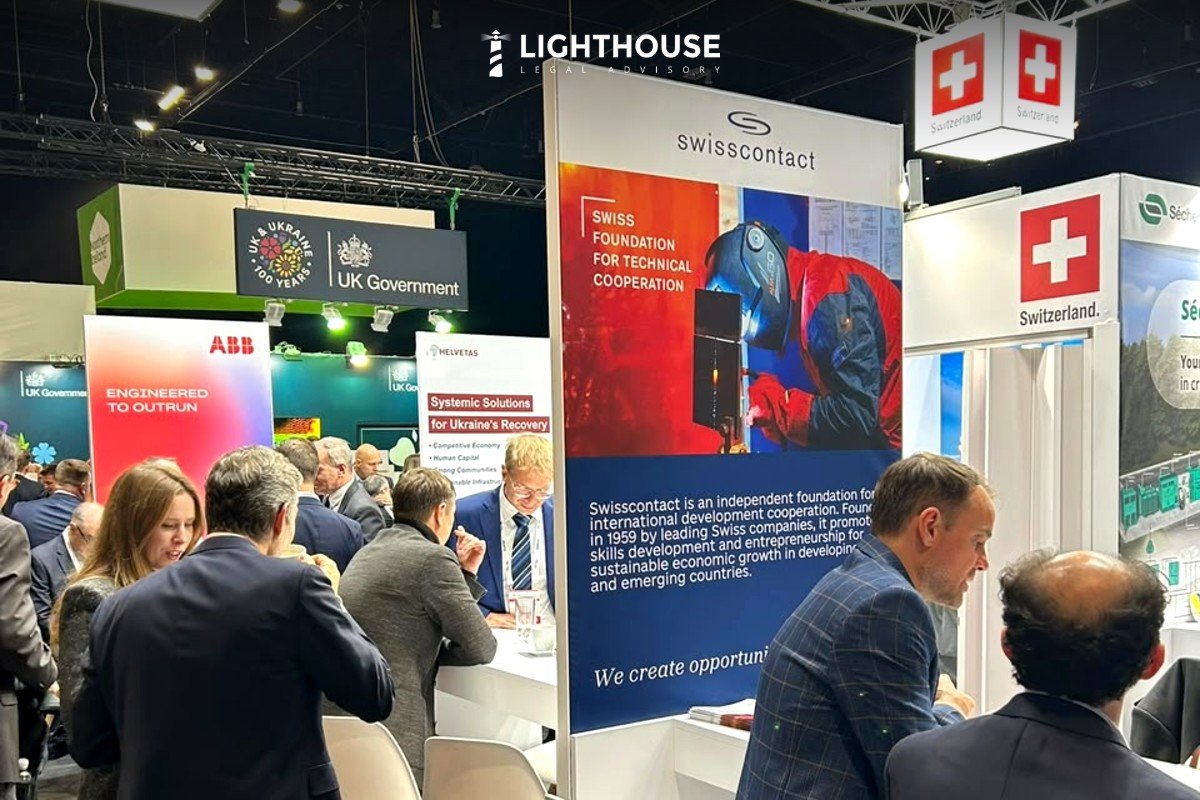
Switzerland once again had a strong presence. The SWISS Pavilion, organised for the fourth time by Switzerland Global Enterprise, the Swiss Business Hub Central Europe and the Swiss embassies in Poland and Ukraine, connected Swiss decision-makers and companies with Ukrainian partners. Switzerland’s State Secretariat for Economic Affairs (SECO), for example, signed three contracts with the Swiss companies STATRON AG, Arthur Flury AG and R&S Group to support Ukraine’s reconstruction. Selected under Switzerland’s second call for proposals for Ukraine, these projects will strengthen Ukraine’s energy infrastructure and its public transport sector. Numerous agreements and memorandums were signed, all aimed at bringing resources together and turning them into recovery projects for Ukraine.
Every partner needs different information
However, each of these projects is delivered in an environment of extraordinary pressure and uncertainty. The number of challenges and sensitive issues is enormous, and they concern not only the technical side of the work but the information side too.
The difficulty is that every participant in a recovery project approaches information differently. Donors need to show their governments and taxpayers how funds are used. Companies must protect commercial interests and their staff. Government institutions follow security protocols and political priorities. Communities expect to know what is happening in their towns. Each of these needs is legitimate, and they do not always point in the same direction.
In recovery projects, the most important communication rarely happens on stage. It happens in coordination meetings between donors and ministries, in conversations between a contractor and a local utility, and in briefings that prepare partners for risks. It starts long before there are results to show and continues long after the project is handed over.

Communication by default instead of by design
In my work with government institutions and international partners, I see a consistent pattern: strategic communications are rarely built into recovery projects from the start. The consequence is predictable. What is not requested at the design stage does not appear later: there is no mandate, no budget and no one responsible. Communication then happens by default rather than by design. Yet when it is planned early, it becomes one of the tools that hold a recovery project together.
Five areas where strategic communications in recovery make a difference
Let me outline five areas where strategic communications make a real difference in recovery projects:
- Shared understanding. Everyone involved, from donors and companies to government and communities, knows the goals, their roles and what to expect from each other.
- Ongoing coordination. Partners stay aligned through regular contact, briefings and agreed positions, much of it behind the scenes.
- Clear boundaries. Everyone knows what can be shared, with whom, and what must stay protected.
- Targeted publicity. Where it is safe to speak, communication is tailored to each target group, from partner governments and investors to Ukrainian communities and local citizens, building understanding, trust and, ultimately, their support.
- Readiness for crises. When an attack or a disinformation campaign happens, partners already know how to respond.
Case 1: Skills4Recovery — 25,000 people reached through a shared message
One case from practice I would like to share is Skills4Recovery, a multi-donor initiative financed by the EU, Germany, Poland, Estonia and Denmark and implemented by GIZ and Solidarity Fund PL together with the Ministry of Education and Science of Ukraine. The initiative helps Ukraine develop the skilled workforce needed for its recovery by strengthening vocational education and training and building closer links between education providers and employers.
Skills4Recovery demonstrates the importance of coordinated communications in a complex partnership involving donors, implementing organisations, government institutions, vocational education providers and businesses. With different stakeholders bringing their own priorities and perspectives, a shared communication approach helps align key messages and communicate the initiative’s goals and opportunities to different audiences. So far, some 25,000 people have benefited from the initiative’s training, modern equipment and improved teaching.
This coordinated approach is reflected, for instance, in a joint information campaign with the Ministry of Education and Science of Ukraine that focuses on cooperation between vocational colleges and employers. The campaign explains how businesses can get involved in training future employees, from helping shape curricula to offering practical training opportunities. It also highlights successful partnerships, showing employers how this cooperation can help them address skills shortages and find qualified workers.
Case 2: energy — 13 million people reached without exposing the grid
Of course, not every sector allows this level of openness. In energy, for example, the approach has to be entirely different: information about facilities, equipment or timelines can put infrastructure and people at direct risk. Yet even here there are options. I saw this first-hand while working on a nationwide energy efficiency campaign implemented together with the Danish Energy Agency and Ukrainian partners under the Ukraine–Denmark Energy Partnership Programme (UDEPP). While much of the information in the energy sector had to stay within a close circle of partners, the campaign focused on what could and should be shared widely: practical advice for households. Its two waves, “Keep This Money for Yourself” and “Save This Energy for Yourself”, showed people how to cut energy costs and stay warm, even under attacks on the energy system, and reached more than 13 million people.

This demonstrates that even in the most sensitive sector, communication can protect what must stay closed and still reach millions of people. Such a balance does not happen by chance. It has to be planned.
Three practical steps for donors and implementing partners
For donors and implementing partners, three practical steps can make a real difference:
- Include communications in the Terms of Reference. If strategic communications are not in the ToR, they will not appear later. A dedicated section with a clear scope, budget and responsible person gives the project a mandate from day one.
- Develop a communication strategy or plan that covers both open and closed information flows. It should define what is communicated publicly, what stays within the partnership, who speaks on behalf of the project and through which channels, and how sensitive information is protected.
- Monitor and adjust. In wartime, no plan survives unchanged. Continuous monitoring and a timely response to change allow partners to stay proactive rather than react to events after they happen.
Recovery is also about how partners work together
The conversations in Warsaw made one thing clear: recovery is not only about what is built, but about how partners work together while building it. That depends on whether everyone involved shares a common understanding of their goals, trusts one another, and knows what to say, to whom and when. Sometimes that means speaking openly. Sometimes it means staying silent.
This is why strategic communications are an integral part of the recovery process itself. When dozens of partners act at the same time and circumstances change daily, results depend on coherent actions and carefully planned navigation: a shared sense of direction, a clear sequence of steps, and the right information reaching the right people at the right moment.
Ukraine’s recovery will depend not only on the resources mobilised, but also on how effectively institutions, businesses and communities work and communicate together to turn commitments into results.
Kateryna Moskal is a Strategic Communications & Stakeholder Engagement Expert working with Ukrainian government institutions and international partners on recovery and EU integration projects. She has led projects commissioned and funded by the EU, EIB, GIZ, UNDP, IOM and USAID. At ReBuild Ukraine 2026 she represented Lighthouse as communications expert.
Read more from Warsaw: How the $150M U.S.-Ukraine Reconstruction Investment Fund works and our series Swiss Companies Rebuilding Ukraine. Follow Lighthouse Legal Media on LinkedIn.